
How Medal Lectures Turn Chemical Breakthroughs into New Research Agendas
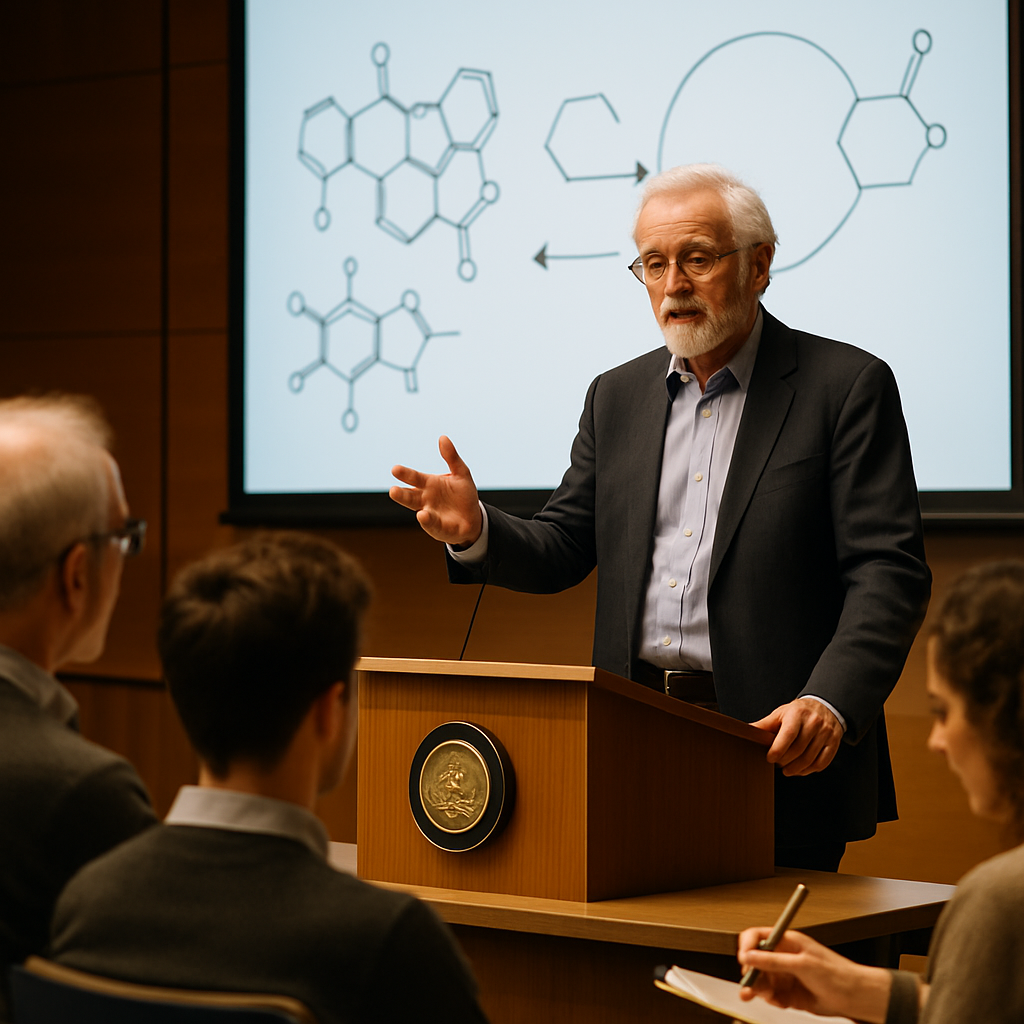
How Medal Lectures Turn Breakthrough Chemical Research into New Research Agendas
Introduction
A major chemistry medal lecture is often seen as the closing scene of a scientific story: the work is recognised, the laureate takes the stage and the field applauds. But its more important role comes after the celebration. At its best, the lecture turns completed research into questions that other scientists can pursue.
That does not happen automatically. Breakthrough chemical research can be technically complex, built on years of careful work and difficult to explain in a single public lecture. Chemistry medal lectures give speakers an opportunity to show what makes a discovery significant, where its limits lie, what it makes possible and which problems remain unsolved.
This is why chemistry medal lectures matter beyond the honour itself. They help set the intellectual agenda. By placing a specialist’s achievements in a wider context, they give researchers, students and institutions a way to consider what deserves attention next.
The people behind the lecture
The medal recipient is at the centre, but chemistry medal lectures are not solo performances. Behind the speaker are collaborators, students, technical staff and earlier researchers whose contributions may be less visible in the formal account. A strong lecture recognises this wider scientific team while making a complex result clear.
The audience also plays an active role. Established researchers listen for implications relevant to their own work; early-career scientists look for methods, problems and new directions to explore. For both groups, chemistry medal lectures are most valuable when they go beyond a polished account of success and show how the work moved from uncertainty to a testable result. These keynote speaker insights can help listeners identify useful questions for their own research.
Institutions and scientific societies also shape the conversation around chemistry medal lectures. By choosing which achievements to honour and how to present them, they signal what a field considers exemplary: a new method, a powerful explanation, a practical application or a fresh way to approach a longstanding problem. But recognition is not a verdict on every other line of research. It draws attention to one achievement without making all others marginal.
The most productive lectures balance recognition with context. They give the recipient’s contribution its due while showing that scientific progress is cumulative and involves many people. An award marks a landmark; the research community decides what paths to follow from it.
Key factors
The first factor is narrative structure. Chemistry medal lectures that simply list results can feel like a catalogue: impressive, but hard to build on. A stronger account traces the work from the original obstacle through the assumptions that proved inadequate and the evidence that changed the picture, then shows which questions came into view.
This matters because research agenda development takes more than knowing what worked. Other scientists need to understand why an approach succeeded, where it might fail and which parts they can adapt. A medal lecture might show that a difficult technique can be applied elsewhere, or that its success depends on conditions too specific to generalise. Either conclusion is useful.
The second factor is candour about uncertainty. Scientific storytelling can make a breakthrough seem inevitable, as if every step led directly to the final result. In reality, important work often involves dead ends, competing explanations and measurements that force researchers to change course. Chemistry medal lectures that acknowledge these turns do not diminish the achievement; they give future researchers a more accurate picture of the work ahead.
Third, the lecture should connect specialised findings to emerging chemistry fields without suggesting that one discovery answers every question. Chemistry medal lectures can highlight opportunities across these emerging chemistry fields, but a new tool’s broader value depends on access, reproducibility and whether other laboratories can use it. The strongest lectures distinguish demonstrated results from possible future applications.
Finally, there is the question of scientific impact. Recognition can draw attention, attract collaborators and prompt funding bodies to reconsider priorities. It can also concentrate resources on fashionable problems. A responsible lecture does not dictate where investment should go. Instead, it helps the audience judge which opportunities are established, which are speculative and what evidence is needed to tell the difference.
From recognition to next steps
Chemistry medal lectures must connect a compelling account of past success with the needs of future research. The speaker begins by setting out the problem and explaining why existing approaches could not solve it. The audience considers not just the result, but whether the methods and reasoning might apply beyond the original laboratory.
A key moment comes when the speaker moves from achievement to limitation. A technique may work only within a narrow range, a mechanism may remain contested, or a promising application may not have been tested in practice. Naming these gaps gives the audience more than a celebration of past success: it defines research questions that can be investigated.
In closing, the strongest lectures identify a few important next steps. These might include testing a proposed mechanism, developing more accessible instruments or checking whether a result holds across different chemical systems. The aim is not to give the field a fixed plan, but to make the next experiments more focused and easier to justify.
There is a risk of imbalance. A dazzling story can overshadow less celebrated work, while a lecture devoted only to technical detail may not reach researchers beyond a narrow specialism. The best speakers meet both challenges: they make the science understandable without oversimplifying it, and encourage new research without suggesting that the field has only one right direction.
Conclusion
Chemistry medal lectures have the greatest influence when they are more than ceremonies. Their lasting value lies in connecting an individual achievement to the collective work of testing, extending and sometimes revising its implications. They bridge what has been established and what the discipline has yet to discover.
That bridge depends on precise storytelling, an honest account of uncertainty and a clear sense of where the evidence ends. A strong medal lecture offers researchers not just a celebrated result, but better questions. Its value is measured by the investigations it makes possible—and by whether the agenda it helps shape remains open to evidence, criticism and unexpected directions.
