
A Maximum Payout Is Not Always the Same as a Maximum Win
A Maximum Payout Is Not Always the Same as a Maximum Win
Introduction
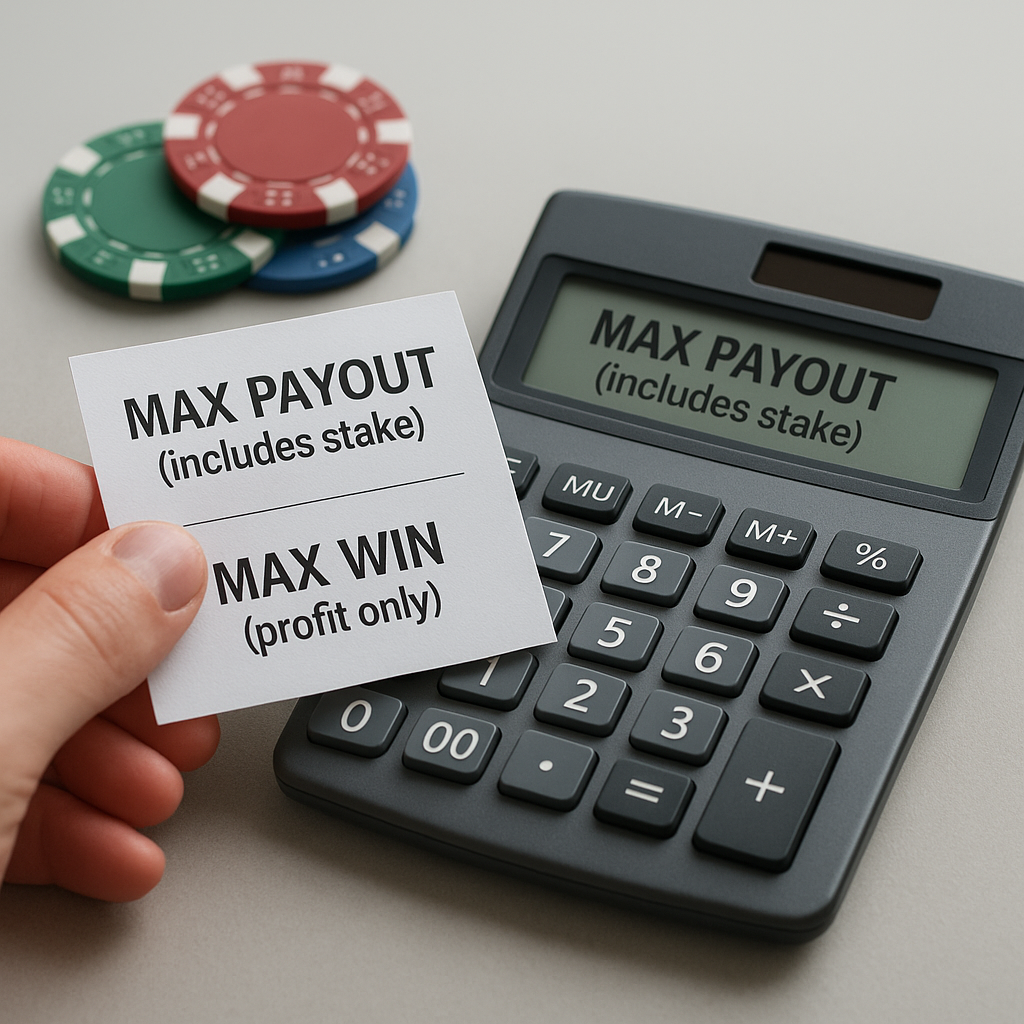
The largest number displayed beside a bet can look like a promise of profit. It may not be. A maximum payout can mean the total amount returned if a bet wins, including the original stake. A maximum win usually refers to profit alone. Since these terms are not always used consistently, check the bet slip, market rules and settlement conditions rather than relying on the headline figure.
The distinction matters when weighing risk against reward. If one figure includes the stake and another does not, comparing them directly overstates the potential return. A winning bet is not necessarily a profitable one: the stake, odds and any applicable cap determine how much the bettor actually keeps.
Analysis of teams or players
Team and player analysis can help determine whether a price is attractive, but it cannot tell you how a sportsbook defines a payout. A strong favourite may be more likely to win than an underdog, yet offer a smaller return at the quoted odds. These are separate questions: first assess the likelihood of the outcome, then calculate what a successful bet would pay under the relevant terms.
That distinction can get lost in markets based on player performances, team results or multiple selections. A bettor may consider form, availability, matchups or a player’s role, then assume the largest figure on the screen is the profit from a successful bet. It could instead be the gross return, a settlement cap or an amount available only for a particular stake or market.
Without details of a specific match, there is no responsible way to assign a team-specific probability. The general point applies across sports: sound analysis may reveal an edge, but its value depends on both the price and the terms for settling a winning bet. An attractive matchup or large potential payout does not remove the need to check the numbers.
Key factors
Start by distinguishing gross return from net profit. Gross return generally includes the original stake. Net profit is what remains after the stake is subtracted, assuming the bet wins and no further deductions apply. Since usage varies, check the operator’s definition instead of relying on the label.
Consider a hypothetical $100 bet at decimal odds of 2.00. If it wins, the gross return is $200: the $100 stake plus $100 in profit. So if the screen lists $200 as the maximum payout, that does not mean the bettor wins $200. The maximum win, if defined as profit, is $100.
Caps can widen the difference. Suppose the same bet has a maximum payout of $150. If the cap applies to the total return, the bettor receives $150 and makes $50 in profit after accounting for the stake. If the rules instead set a maximum win of $150, the total return could be $250. The figures may look similar on screen, but they mean different things financially.
Stake limits matter too. A maximum payout may be based on the permitted stake, while a maximum win may apply to the profit from that stake. Operators may also limit the amount accepted, particularly when prices or market conditions change. A theoretical return based on the odds does not guarantee that the full stake can be placed at those odds.
Multiple bets add complexity. A same-game combination or accumulator may show a projected return based on every selection winning, but a void or settled leg can change the final calculation. A payout cap may apply to the whole ticket, a market or a particular event. Treat the projected return as conditional until you understand every selection and settlement rule.
Other terms may affect the amount received, including dead-heat rules, cancellations, price changes, promotional conditions, taxes or other deductions. These vary by market and jurisdiction, so do not assume they apply universally. Check the stake, quoted odds, payout definition, relevant cap and any conditions that could change settlement.
Scenario of a match
Suppose a bettor backs one side in a hypothetical match at decimal odds of 3.00, staking $50. With no cap or adjustment, the potential gross return is $150: the $50 stake plus $100 in profit. In everyday terms, the maximum win is $100, not $150.
Now suppose the ticket has a $120 maximum payout. If that limit refers to the total return, a winning bet pays $120, leaving $70 in profit after the stake is accounted for. If $120 is instead described as the maximum win, it could mean $120 in profit and a total return of $170. The match result is the same in both cases, but the financial outcome is not.
That is why it matters what follows the word “maximum.” Maximum payout, maximum winnings, maximum stake and maximum return can refer to different limits. A large figure on screen is not necessarily guaranteed or pure profit. Check how the amount is defined and whether the ticket qualifies for it.
Conclusion
A maximum payout is a ceiling on a stated return, which may include the original stake. A maximum win generally refers to profit, though operators and markets do not always use these terms consistently. The distinction affects how much a bettor can actually gain from a successful bet.
Sports analysis can help determine whether the odds reflect the likely outcome. Betting analysis must also account for the stake, odds, any payout cap and the settlement rules. Until those details are clear, the biggest number on a bet slip is just a headline—not a reliable measure of potential profit.