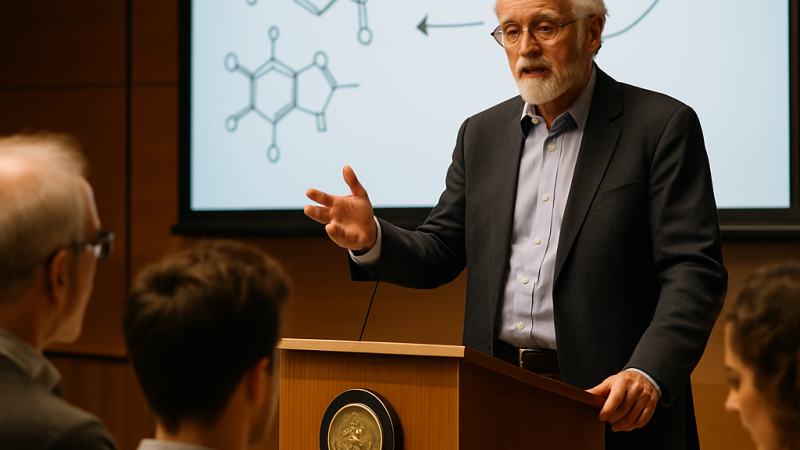
How Medal Lectures Celebrate Transformative Contributions to Chemistry
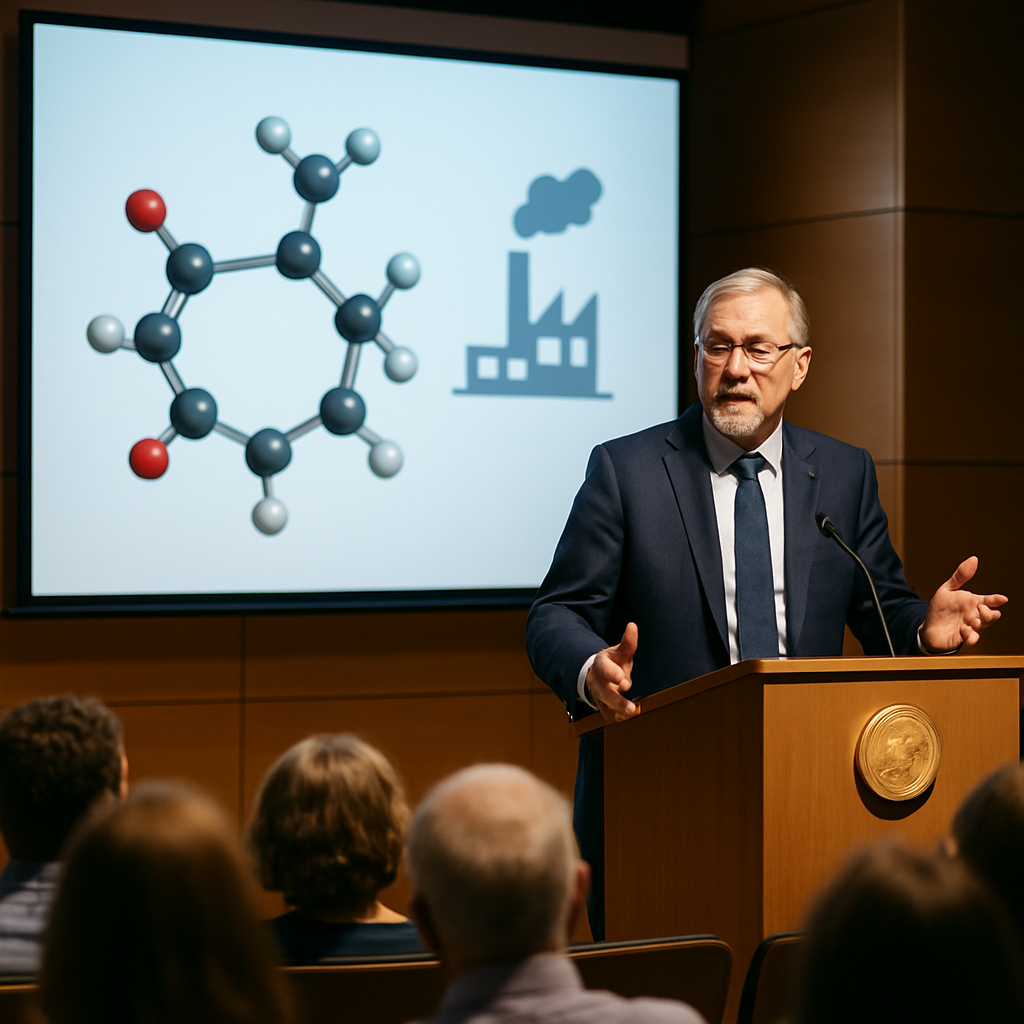
How Medal Lectures Celebrate Transformative Contributions to Chemistry
Introduction
A medal marks a moment of recognition. A lecture explains why it matters. At their best, chemistry medal lectures do both: they honour an individual or team and show how their work changed the questions chemists ask, the tools they use or the possibilities open to society. These chemistry medal lectures connect personal achievement with the wider story of scientific progress.
Scientific progress rarely comes from a single, isolated breakthrough. Results often build on years of method development, collaboration across disciplines and careful testing. A lecture brings these elements together, showing how knowledge takes shape and what it makes possible. In that sense, chemistry medal lectures are not simply ceremonies; they are opportunities to examine how research advances.
Medal lectures vary by institution, but the strongest share a purpose: they put achievements in context, make technical work accessible without oversimplifying it, and reveal the thinking behind the recognition. As a form of chemistry recognition, they can help audiences understand why particular research contributions matter.
The laureates and the ideas behind their work
A chemistry lecture raises a question familiar from sport: who helped make the achievement possible? The featured scientist may be the public face of the work, but the research often involves a wider cast of ideas, instruments and collaborators. Chemistry medal lectures can make that wider contribution visible while explaining why the laureate’s work merits attention among scientific awards.
A thoughtful lecture does not present a medal as a verdict on a lone genius. It might explain how a research group developed a technique, how colleagues tested an interpretation or how ideas from another field helped shape a discovery. This broader account does not diminish the laureate’s achievement; it makes it more credible and useful to future researchers. The best chemistry medal lectures therefore celebrate both individual insight and collaborative effort.
The challenge for distinguished chemists is to explain their expertise without turning a lecture into a list of publications or technical results. Audiences need to know what problem the research addressed, why it was difficult and what insight changed the field. A compelling speaker connects molecular detail with wider consequences, showing how each informs the other. This is one reason chemistry medal lectures can be valuable to audiences well beyond a specialist research group.
Lectures also bring generations together. Early-career scientists can follow how a question develops, while established researchers can see a familiar field from a new perspective. The value lies not only in celebrating a result, but in showing the habits of thought behind it. Across a lecture series, chemistry medal lectures can also reveal how different generations approach enduring questions.
What makes a strong lecture
First comes intellectual clarity. A lecture should explain what changed. Did researchers better understand a long-standing mechanism? Did a new method make previously impossible measurements possible? Did a material or reaction open up a new line of inquiry? Without a clear central idea, even important research can sound like a string of specialist details. Chemistry medal lectures are strongest when audiences can leave with a clear understanding of the central advance.
Next comes evidence. Strong research rests on sound reasoning, not grand claims. A good lecture explains how results were tested, where uncertainty remained and how later work supported or revised the original interpretation. This gives audiences a more accurate picture than a tidy story of inevitable success. By presenting evidence in context, chemistry medal lectures show how recognition can be grounded in careful research.
Then there is consequence. Chemistry spans fundamental explanations of matter and applications in medicine, energy, manufacturing and environmental science. A lecture can trace these connections without suggesting that every discovery leads directly to a practical solution. Distinguishing proven impact from future potential is often more honest and informative. This balance helps chemistry medal lectures explain the significance of research contributions without overstating them.
Finally, a lecture must communicate. The speaker needs to make their work understandable beyond a narrow circle of specialists. That means deciding what to simplify, what to explain and which complexities are essential to the science. Communication is not an add-on; it is part of how a field shares and examines its knowledge. Chemistry medal lectures offer a public setting in which that communication can be tested and improved.
A well-designed lecture series can extend this exchange. Recorded talks, discussions and related presentations turn an honour into an ongoing conversation. They also let audiences compare different approaches and see how transformative chemistry can emerge from varied methods, scales and collaborations. When chemistry medal lectures are part of a broader lecture series, their ideas can continue reaching students, researchers and the public.
The lecture as a test of ideas
Think of the event not as a contest between researchers, but as a test of whether complex work can be explained without losing its substance. The opening sets out the problem; the main section follows the evidence and the choices behind the research; the conclusion considers what changed and what remains unresolved. The tension lies in the science: how far can an explanation go before the evidence sets a limit? Chemistry medal lectures are most persuasive when they make this intellectual journey clear.
The audience helps shape that test. Questions can uncover a missing assumption, bring out an overlooked collaboration or ask whether a proposed application has been demonstrated. When the exchange is candid, the lecture becomes more than an account of past success. It shows how scientific claims stand up to scrutiny. Chemistry medal lectures thus offer audiences a chance to engage with the reasoning behind the recognition.
Balance matters. A talk full of technical detail may lose non-specialists, while one focused too heavily on social impact may leave chemists unsure whether the science has been treated rigorously. The best speakers move between these levels, keeping the main idea clear while giving each audience enough detail to judge the work. That balance is a defining strength of effective chemistry medal lectures.
Chemistry medal lectures succeed when ceremony and criticism can coexist. Recognition gives the work a platform; a clear, evidence-based account explains both its reach and its limits. A medal signals importance, and a strong lecture helps the audience understand why. In this way, chemistry medal lectures give scientific awards meaning beyond the moment of presentation.
Conclusion
Meaningful recognition in chemistry does not end with the presentation of an award. It gives researchers the chance to examine and explain the work, and to place it in the history of a changing discipline. A well-structured lecture shows how an advance emerged and why it changed what scientists could ask or do next. Chemistry medal lectures make that process accessible while keeping the science at the centre.
That is the lasting contribution of these lectures: they make exceptional work understandable and shareable. By respecting the evidence, acknowledging collaboration and connecting molecular insight to wider consequences, they honour both the chemist and the collective effort that moves the field forward. As a form of chemistry recognition, chemistry medal lectures help audiences appreciate the research contributions that shape the discipline.