
From Conference Poster to Collaborative Project: Turning Research Conversations into Partnerships
From Conference Poster to Collaborative Project: Turning Research Conversations into Partnerships
Introduction
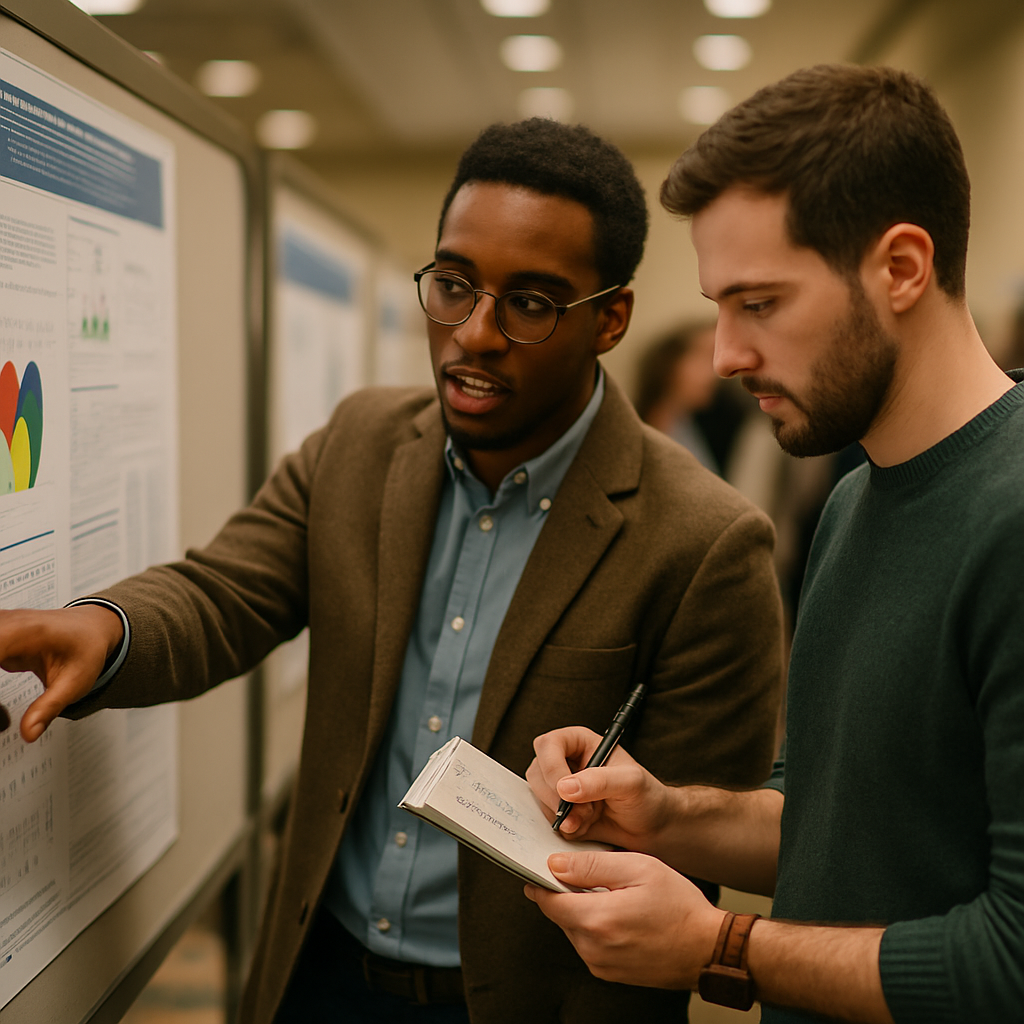
Poster sessions are made for brief encounters. Researchers move between crowded boards, stopping to look at a chart, a striking result or a question that connects with their own work. A chemistry poster session gives these conversations a place to begin. A conversation may last five minutes, but the possibility it raises can last much longer.
Interest alone does not make a partnership. Turning a conversation at a chemistry poster session into a collaborative project takes more than swapping contact details or praising the research. It takes a shared problem, a clear reason to work together and a practical next step.
A poster session is not a finished pitch so much as a first test of the fit between researchers. At a chemistry poster session, each person gets a sense of the other’s ideas, expertise and willingness to commit. The best conversations do not end with an instant promise; they show whether there is a real connection worth exploring.
Analysis of teams or players
There are two main participants: the presenter and the visitor. In a chemistry poster session, the presenter knows the research well but may be too close to it to see how another discipline, method or dataset could shape the next question. The visitor brings a fresh perspective but needs to distinguish genuine potential from polite enthusiasm.
The presenter’s task is to explain the research without turning the poster into a lecture. A clear account of the problem, approach and open questions gives a potential collaborator something specific to respond to. At a chemistry poster session, results alone may impress; a well-defined uncertainty invites a more useful conversation.
The visitor should bring more than a compliment. A focused question about an assumption, method or unexplained result shows genuine interest and helps both sides assess the fit. Rather than pitching their own work, the visitor can ask how the two projects might connect. This kind of conference networking makes a chemistry poster session useful beyond the immediate exchange.
The roles can shift during the conversation. The presenter may discover that the visitor has a tool the project needs; the visitor may see a new use for their expertise. Good networking is not about collecting contacts. It is about finding complementary strengths.
Key factors
The first factor is a shared question. Researchers may use different methods and disciplinary language, but a partnership needs common ground: a problem both sides consider important and a reason to tackle it together. A chemistry poster session can reveal that common ground when researchers make room for questions beyond the poster’s main results.
The second is complementarity. Similar interests can make conversation easy, but useful partnerships often rely on different strengths. One group may have a strong experimental design, while another brings a measurement technique, theoretical perspective or access to material that opens up new ways to test it.
Complementary skills are not enough on their own. Researchers also need to understand what each person would contribute, how the work might be divided and whether their expectations match. If one person has in mind a quick exchange of advice and the other expects a long-term study, it is better to find out before making commitments.
Collaborative project planning starts with a realistic conversation about scope, not a polished proposal. What is the next question the teams can answer? What expertise will they need? What must they learn before committing to a timeline, resources or authorship? Discussing these points early helps prevent assumptions from being mistaken for agreement.
Trust also depends on respecting boundaries. The presenter may be sharing preliminary findings; the visitor may have limits on their time, funding or data. A good conversation acknowledges those constraints rather than treating openness as an obligation.
Finally, follow up. Conference conversations can quickly fade amid travel, deadlines and new meetings. A short, specific follow-up communication can keep the discussion alive. It should recap the question, suggest a possible next step and give the other researcher room to revise or decline the idea. That is especially useful after a chemistry poster session, when both researchers may have met many people.
Match scenario
Imagine a conversation at a chemistry poster session. The presenter describes a measurement problem that limits what the team can learn from its experiments. A visiting researcher thinks a technique from their field might help, but neither knows whether it will work in this context.
They do not need to leave with a grand plan. The visitor asks what evidence would show that the technique is useful, and the presenter explains what samples and controls are available. Together, they identify a small test and the questions to resolve before trying it. The chemistry poster session has helped them define a manageable first step.
This is a starting point, not a result. After the conference, a follow-up can help the researchers decide what to do: schedule a focused discussion, share only information both are comfortable circulating and agree on who will assess feasibility. If the test looks promising, they can plan a larger project. If it does not, they will have learned something without building a partnership on guesswork.
The exchange could also stall. A vague promise to stay in touch gives them no shared task, while a commitment to a full collaboration may come before they have enough evidence. A small, meaningful next step tests both the scientific fit and how well the researchers work together.
From there, the partnership depends on execution. Each side needs to deliver what they agreed to, raise obstacles promptly and revisit the plan if new information changes it. A promising first conversation matters, but the real test is whether the work holds up in practice.
Conclusion
A chemistry poster session can set the stage for scientific collaboration, but it cannot do the work for researchers. Progress comes when they move from admiration to a shared question, identify complementary roles and agree on a concrete next step.
Research partnerships are usually built in stages. Clear questions, honest boundaries and realistic planning help both sides assess the opportunity. Timely follow-up shows whether the connection can last beyond the conference floor.
The best outcome is not always an immediate grant, paper or formal agreement. It may be a focused experiment, an exchange of expertise or a decision that the ideas do not fit. What matters is leaving the conversation with clarity—and, when there is a good match, a credible path from poster to partnership.
