What Makes an Outstanding Medal Lecture in the Chemical Sciences
Introduction
An outstanding medal lecture is not a victory lap. It shows whether a scientist can make years of difficult work feel urgent and engaging to people outside their specialism. The medal recognises achievement; the lecture explains why it matters. A medal lecture chemistry audience should leave with a clearer sense of both the research and its significance.
That distinction matters in the chemical sciences, where a result may depend on years of synthesis, measurement and interpretation. The speaker must guide the audience through that work without confusing technical detail with insight. At its best, the medal lecture chemistry format builds around a clear question, evidence that changes how we see the problem, and a conclusion the audience can follow.
People searching for a chemistry medal lecture may expect a prominent scientist to recount a distinguished career. A memorable medal lecture chemistry talk does more: it shows how a field learned to see a problem differently. The phrase “medal lecture chemistry” points to a talk that connects recognised achievement with the ideas behind it.
Analysis of the players: speaker, science and audience
The speaker is central, but the science must carry the argument and the audience shapes how it is told. Specialists want precision; early-career researchers want a way into the work; non-specialists need to understand why the result matters. A medal lecture chemistry presentation aimed at only one group leaves the others behind.
The speaker’s first task is to identify the real protagonist. It might be a stubborn chemical problem, a molecule with unexpected behaviour, a measurement made possible by a new method, or a dispute over how to interpret evidence. A career timeline is rarely compelling. A question is.
That choice shapes the research storytelling. Rather than presenting each paper as a separate achievement, the speaker can show how one answer raised a harder question, how a failed approach narrowed the options, or how a new tool made previously hidden details observable. This is not drama added to the science; it is the logic of research made visible. In a medal lecture chemistry story, each turn should help the audience understand the scientific argument.
The audience is not a single level of expertise. A specialist may know the technique but not the neighbouring field; a student may grasp the broad idea but not the shorthand. Good science communication anticipates these differences, defining essential terms without explaining everything the audience already knows. That balance is especially important for an invited speaker addressing a mixed audience in a medal lecture chemistry setting.
Key factors
First, the lecture needs a question that matters. The opening should establish what is unknown and why the answer matters in chemistry or beyond it. Specificity is more persuasive than grand claims. A sharply framed problem gives the audience a reason to follow the experimental detail and gives the medal lecture chemistry narrative a clear direction.
Second, the lecture structure needs momentum. A lecture need not follow a timeline. The speaker might introduce the puzzle, explain why existing theories fall short, present the decisive method and return to the original question with new evidence. A chronological account has its place, but a list of dates and appointments can blur the history of a career with the argument of a lecture. A strong medal lecture chemistry structure keeps the central question in view.
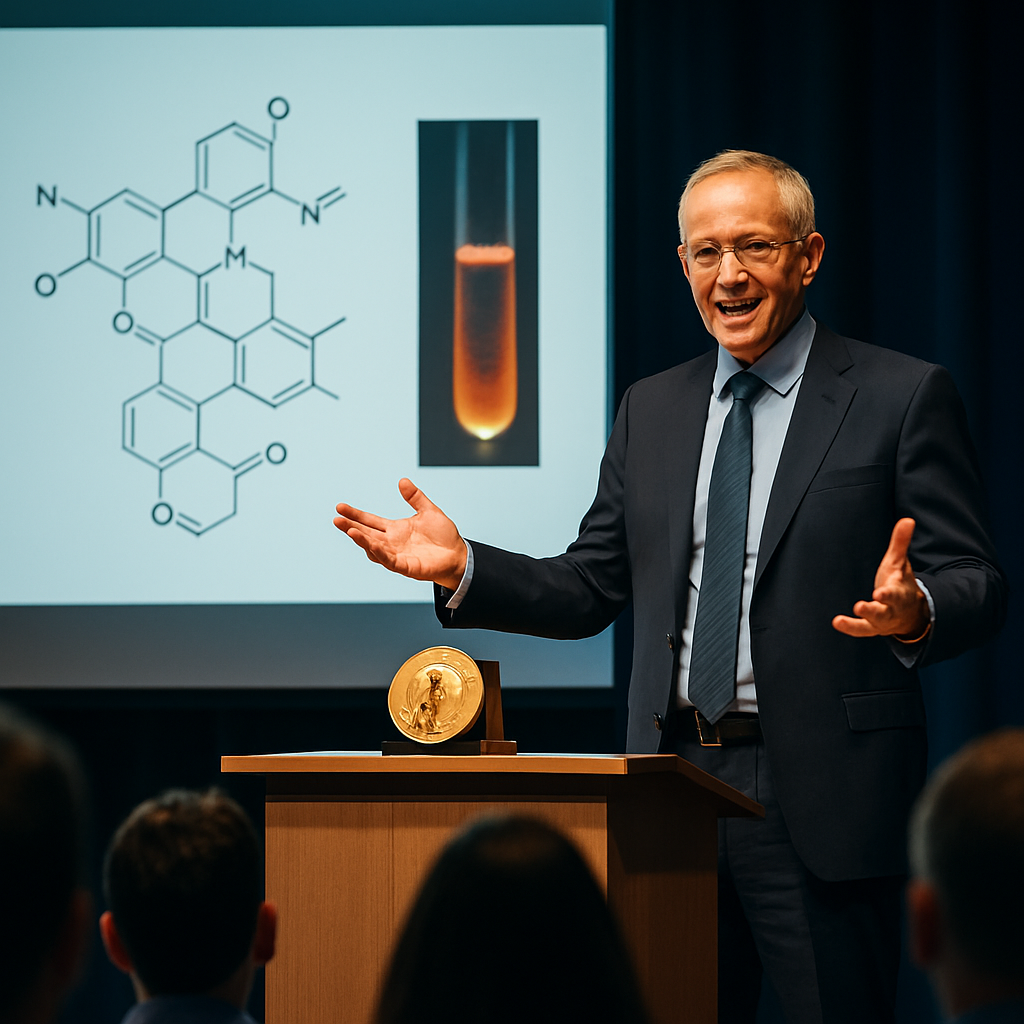
Third, the evidence must remain clear. A chemical discovery can be counterintuitive, and an elegant interpretation is not enough. The audience needs to know what was measured, what the result supports and where uncertainty remains. A well-chosen spectrum, structure, reaction scheme or comparison can be more useful than a crowded slide, as long as the speaker explains what to notice and why. In medal lecture chemistry, discovery is most compelling when the evidence is easy to follow.
Judgement matters as much as knowledge. A medal lecture should not turn a complex result into a neat anecdote or bury its main point in caveats. Strong speakers distinguish observation from interpretation and speculation. They explain what the work established, what it suggests and what remains unresolved. This is a mark of a thoughtful medal lecture chemistry account.
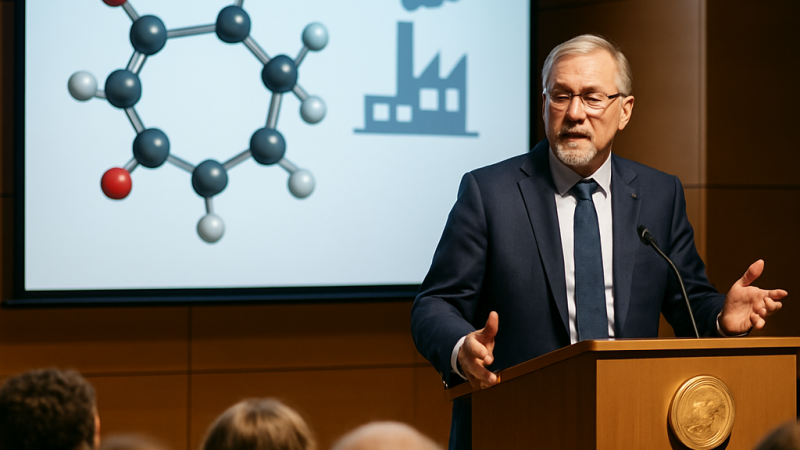
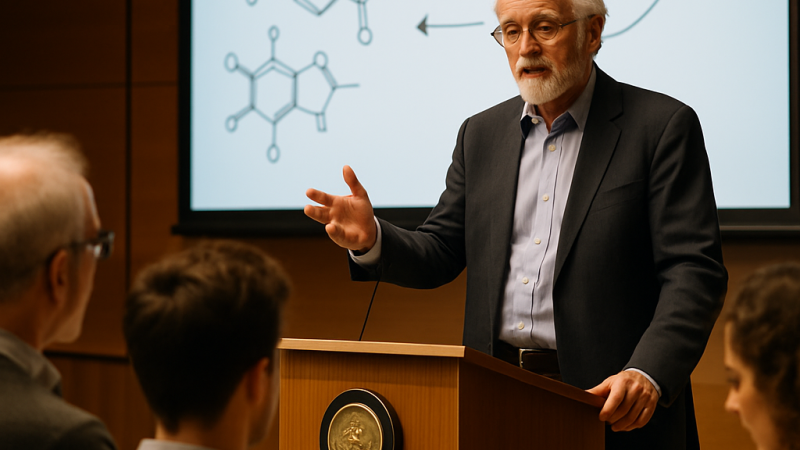
Visuals should support the argument, not decorate it. Slides can guide attention through a molecular structure or data set without competing with the content. If an image needs a paragraph of tiny labels, it may be poorly designed—or unnecessary. The audience should be able to listen and look at the same time, whether the talk is a first medal lecture chemistry presentation or a familiar topic revisited for a new audience.
Pacing matters, too. Technical depth is valuable, but every detour costs time and attention. A lecture should vary its pace: slow down for unfamiliar concepts, move quickly through familiar ground and pause when a result needs time to register. Humour and personal details can help, but neither replaces a clear argument. An invited speaker can use these choices to make medal lecture chemistry accessible without diluting its substance.
The ending should point beyond the speaker’s achievements. It should return to the original question, explain what changed and identify what remains uncertain. The audience leaves with a sense of where the chemistry might go next—and why a medal lecture chemistry talk can matter beyond the award itself.
Scenario of the match: how a lecture unfolds
Imagine a lecture about a chemical transformation that resisted explanation. The speaker starts with the gap between what the established model predicted and what experiments showed, rather than with a biography. The audience understands the problem before hearing about the method. This opening gives the medal lecture chemistry story an immediate focus.
The talk then introduces the tools and people behind the investigation. An early result narrows the possibilities but does not settle the mechanism. The speaker explains why one plausible interpretation fails, presents the evidence against it and gives the audience time to follow the alternative. Each section develops the same central question instead of introducing a new one.
Near the end, the speaker puts the result in context. The work may change how chemists think about a class of reactions or offer a starting point for unanswered questions. Either way, the claim stays grounded in evidence. The final image or sentence should leave the audience thinking about the idea, not just the medal.
The equivalent of a late twist is not a theatrical reveal but a change in understanding: a settled mechanism is reconsidered, an experimental limitation points to a new approach, or a discovery proves more useful than its authors expected. The audience should feel that the argument has moved forward. That kind of shift gives medal lecture chemistry its narrative force.
Conclusion
An outstanding medal lecture balances authority with openness. It gives the audience enough chemistry to trust the result, enough narrative to follow the work and enough restraint to distinguish evidence from ambition. The aim is not to simplify at any cost, but to choose details that make a complex idea clear without diminishing it.
The medal recognises achievement, but the lecture succeeds moment by moment in the room. When the central question is compelling, the evidence is clear and the story follows the turns of discovery, the speaker does more than recount their work. They show why the chemistry matters—and what remains to be found. That is the lasting value of a medal lecture chemistry address.